
There is a specific, intoxicating magic that happens the exact moment a ferry pulls away from a concrete pier. The engines rumble, the smell of diesel mixes with salty sea air, and the island you just spent three days falling in love with begins to shrink into a green-and-gold speck on the horizon. Ahead lies nothing but open, shimmering water—and the promise of a completely different world waiting just beyond the crest of the waves.
I’ve spent the better part of the last decade chasing this feeling. I’ve island-hopped across five continents, sometimes with nothing but a battered backpack and a pocketful of crumpled local currency, and other times splurging on sleek catamarans. Along the way, I’ve made every classic mistake in the book: I’ve missed the last weekly ferry in remote archipelagos, booked flights that cost more than my entire accommodation budget, and ended up stranded on islands that looked like paradise on Instagram but felt like a logistical purgatory in reality.
But those mistakes taught me a secret: the perfect island-hopping trip isn't about visiting the most islands; it’s about choosing the right archipelago and mastering the art of the transition.
As we head into 2026, travel trends show that searches for island-hopping adventures have spiked by over 25%. Travelers are no longer content with staying in a single resort for two weeks; we want variety, contrast, and the thrill of discovery.
Whether you are looking for sun-bleached European ruins, dramatic volcanic cliffs in the Atlantic, or secret tropical beaches in Southeast Asia, here is my highly curated, battle-tested guide to the best island hopping destinations in the world for 2026.
1. The Greek Cyclades: The Timeless Blueprint of Island Hopping
Whenever someone asks me where they should go for their very first island-hopping trip, my answer is always the same: Greece. The Cyclades are the undisputed blueprint of this travel style. The infrastructure is incredibly mature, the ferries are massive and reliable, and the sheer variety of experiences compressed into a small geographical area is unmatched.
My Personal Route: The Highs and Lows of the Aegean
On my first trip to the Cyclades, I tried to do what everyone does: Mykonos to Santorini to Milos, all in six days. It was an absolute disaster. I spent more time checking in and out of hotels and waiting at crowded ports than actually enjoying the islands.
When I returned, I changed my strategy entirely. I focused on a slow, intentional route: Athens (Piraeus) ➔ Paros ➔ Naxos ➔ Amorgos.
- Paros: This is where you go to ease into the island rhythm. I spent my mornings drinking freddo espressos in Naoussa, watching fishermen beat octopuses against the stone docks to tenderize them, and my afternoons windsurfing at Golden Beach.
- Naxos: Just a quick 45-minute ferry ride from Paros, Naxos feels like a different country. It is fertile, mountainous, and deeply agricultural. Here, I rented a scooter and drove up into the high mountain villages of Halki and Apiranthos, tasting local kitron liqueur and eating slow-roasted lamb that cost less than a cocktail in Mykonos.
- Amorgos: This is the wild, dramatic edge of the Cyclades. Famous as the filming location for The Big Blue, it features towering cliffs and the breathtaking Hozoviotissa Monastery, which clings precariously to a sheer cliff face 300 meters above the sea. Climbing those stone steps in the midday heat was brutal, but the monk who handed me a glass of cool water and a piece of sweet loukoumi at the top made every drop of sweat worth it.
2026 Insider Tip for Greece
The ferry network in Greece is incredibly sophisticated. For 2026, skip the expensive high-speed Seajets if you have a sensitive stomach; they tend to bounce violently when the summer Meltemi winds pick up. Instead, opt for the larger, slower Blue Star Ferries. They take about an hour longer, but sitting on the open deck with a cold mythos beer as you glide past ancient coastlines is an essential part of the Greek experience.
2. The Philippines: The Wild, Untamed Champion of 2026
If Greece is the classic choice, the Philippines is the reigning champion. According to recent tourism studies evaluating safety, average summer temperatures, and social media popularity, the Philippines has officially been crowned the world's top country for island hopping. With over 7,641 islands, the options are dizzying.
Surviving the Expedition from El Nido to Coron
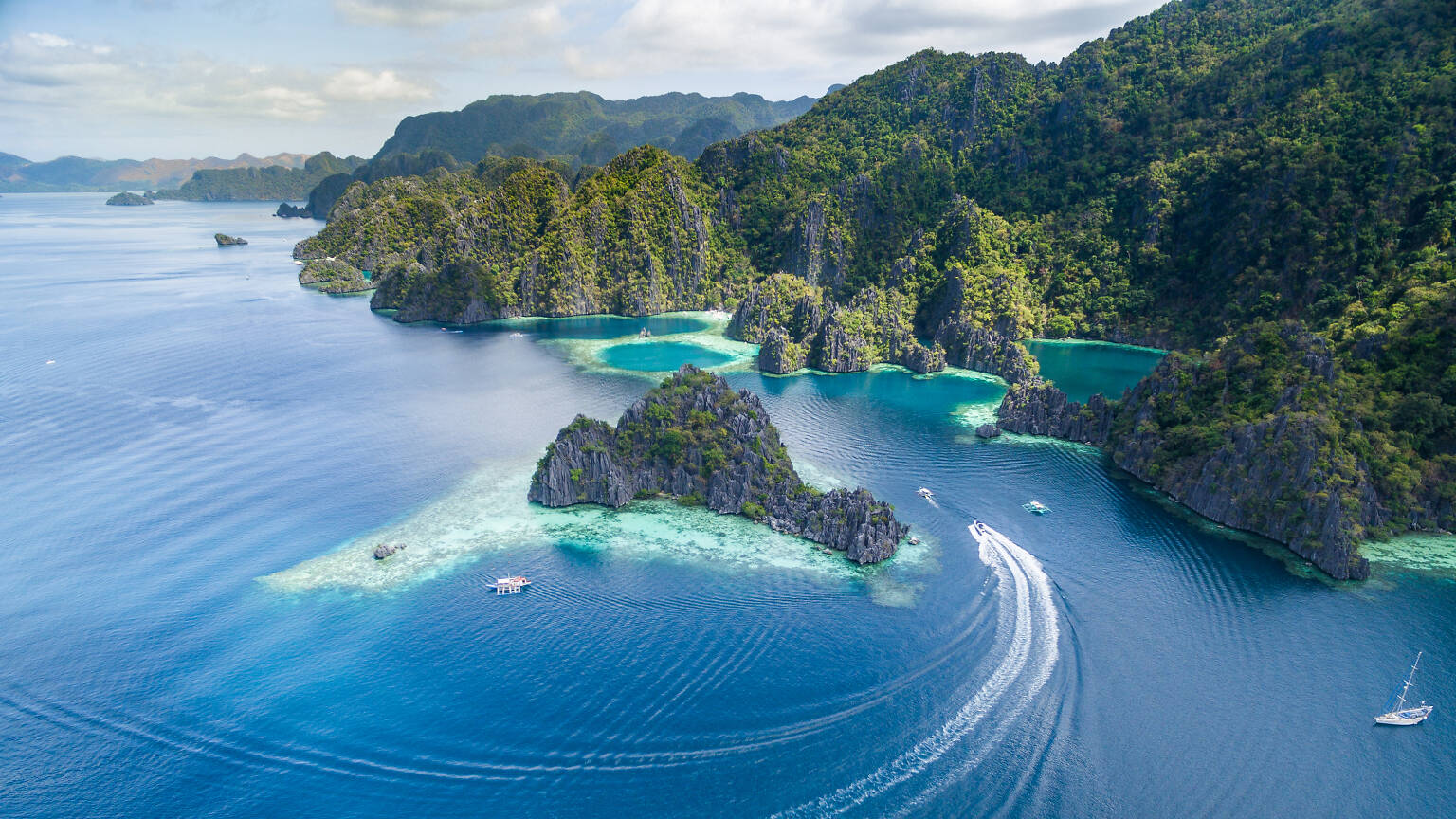
My most memorable (and physically demanding) island-hopping experience took place in the Palawan province. Instead of taking the standard fast ferry between El Nido and Coron, my partner and I booked a three-day expedition on a traditional wooden outrigger boat.
Here is what actually happened: we slept in open-air bamboo beach huts on tiny, uninhabited islands. We ate fresh fish caught off the side of the boat by our crew and grilled over coconut husks. We swam through secret holes in limestone cliffs to enter hidden lagoons where the water was so clear it felt like we were floating in air.
There were no hot showers, no cell service, and on night two, a massive tropical downpour tested the limits of our thatched roof. But waking up at 5:00 AM to watch the sunrise over a deserted white-sand atoll, with nothing but the sound of gentle waves and rustling palms, remains one of the most profound travel discoveries of my life.
Choosing Your Philippine Archipelago
If you want something a bit more comfortable than a raw expedition, the Visayas region is a fantastic alternative for 2026:
- Cebu: Your entry point, famous for canyoneering in Kawasan Falls.
- Siquijor: Known as the "mystical island," filled with ancient healer traditions, rope swings, and multi-tiered waterfalls.
- Bohol: Home to the bizarre Chocolate Hills and the tiny, wide-eyed tarsiers.
3. The Azores, Portugal: The Adventure-Seeker's Paradise
Not all island hopping has to involve palm trees and tropical cocktails. If your idea of paradise involves dramatic volcanic craters, emerald-green lakes, and world-class whale watching, then the Azores should be at the very top of your 2026 bucket list.
Located roughly 1,500 kilometers west of Lisbon in the middle of the Atlantic Ocean, this nine-island archipelago feels like a cross between Hawaii, Iceland, and old-world Portugal.
My Journey Through the Central Group
The Azores are divided into three groups. The Central Group—comprising Pico, Faial, and São Jorge—is the absolute best for island hopping because the islands are close enough to be connected by regular, affordable passenger ferries.
- Pico: Dominated by the towering, symmetrical cone of Mount Pico (Portugal’s highest peak at 2,351 meters). I spent a grueling six hours scrambling up loose volcanic scree to reach the summit. My legs felt like jelly for three days afterward, but standing above the cloud line, watching the neighboring islands of Faial and São Jorge float like green ships in a sea of white, was unforgettable. Pico is also home to UNESCO-listed vineyards, where vines are grown inside small, hand-built black basalt stone pens (currais) to protect them from the salty wind.
- Faial: Just a 30-minute ferry ride from Pico lies Horta, the main harbor of Faial. This port is a legendary stopover for yachts crossing the Atlantic. The marina walls are covered in colorful paintings left by sailors over the decades to bring good luck on their journeys.
- São Jorge: Known as the "island of cliffs," São Jorge is famous for its fajãs—flat, fertile plains created by ancient lava flows or landslides at the base of towering cliffs. Hiking down to Fajã da Caldeira de Santo Cristo, a remote lagoon known for its unique clams, felt like stepping into a lost world.
| Island | Key Highlight | Best For |
|---|---|---|
| Pico | Volcanic vineyards & Mount Pico climb | Hikers & wine enthusiasts |
| Faial | Horta Marina & Capelinhos Volcano | Sailors & geologists |
| São Jorge | Dramatic fajãs & coastal trails | Trekkers & cheese lovers |
4. Thailand’s Andaman Sea: Emerald Waters and Limestone Karsts
Southeast Asia has always been a haven for budget travelers, but Thailand's Andaman Coast offers an island-hopping route that can be tailored to any budget—from cheap wooden longtail boats to luxury speedboats.
The Mistake of the "Day Trip"
When I first arrived in Phuket, I booked a highly advertised "4-Island Day Tour." It was a nightmare of crowded speedboats, smelling gasoline fumes, and arriving at iconic beaches alongside 500 other tourists all trying to take the exact same photo.
To truly experience the Andaman Sea, you must stay overnight on the smaller islands. Once the day-trippers leave at 3:00 PM, these islands transform back into tranquil paradises.
My Recommended Andaman Route for 2026
- Trang Islands (Koh Ngai & Koh Kradan): Start here to escape the crowds. Koh Kradan was recently voted as having some of the best beaches in the world, and it’s true—the water is a shocking shade of neon turquoise, and you can snorkel directly off the sand.
- Koh Lanta: A massive, laid-back island that serves as the perfect base. Rent a scooter, explore the old wooden houses of Lanta Old Town, and eat spicy southern Thai curry at a seaside shack.
- Koh Lipe: Located near the Malaysian border, this tiny island is often called the "Maldives of Thailand." The coral reefs here are incredibly healthy, filled with soft lavender corals and curious clownfish.
5. The Caribbean: Sailing the Grenadines
Let's address the elephant in the room: Caribbean island hopping can be incredibly difficult and prohibitively expensive. Because most Caribbean nations are independent countries, inter-island flights are often routed through major hubs like Miami or San Juan, and ferry connections can be spotty at best.
However, there is one shining exception where true, old-school island hopping still thrives: St. Vincent and the Grenadines.
The Magic of the Mail Boat and Water Taxis
If you don't have the budget to charter a private million-dollar catamaran, you can still navigate this stunning archipelago using the local ferry system. I took the MV Barracuda (the local ferry/mail boat) from St. Vincent down through the islands, and it remains one of my favorite travel memories.
- Bequia: A charming island with a deep-rooted seafaring history. Walk along the Belmont Walkway, watch local craftsmen carve miniature wooden boats, and eat fresh lobster pizza at Mac's.
- Mayreau: The smallest inhabited island in the Grenadines, with a population of about 300 people. There are no resort chains here—just a single steep hill lined with colorful wooden rum shops leading down to Salt Whistle Bay, a perfect double-sided crescent of sand.
- Tobago Cays: This is the crown jewel. A collection of five uninhabited, sand-fringed islets protected by a massive horseshoe coral reef. I spent an afternoon snorkeling with dozens of green sea turtles in the shallow, crystalline waters of the marine park, feeling like I had stepped directly into a nature documentary.
How to Plan Your 2026 Island-Hopping Itinerary (Without Losing Your Mind)
Through trial, error, and many missed departures, I’ve developed a foolproof three-step system for planning any island-hopping journey.
Step 1: Define Your Priorities Early
Before you look at a single ferry schedule, ask yourself: What is the primary goal of this trip?
- If you want ease, culture, and dining, go with the Greek Cyclades.
- If you want raw adventure, diving, and budget-friendly exploration, head to the Philippines or Thailand.
- If you want dramatic landscapes, hiking, and cooler climates, choose the Azores.
Step 2: Respect the "Transition Tax"
Every time you pack your bags, check out of a hotel, travel to a port, board a boat, and check into a new hotel, you lose at least half a day.
- The Golden Rule: Never spend fewer than three nights on an island unless it is purely a transit stop.
- If you have 10 days, limit yourself to a maximum of three islands. Anything more will feel like a military exercise rather than a vacation.
Step 3: Always Build in a Buffer Day
In the world of islands, Mother Nature is the ultimate boss. Ferries get canceled due to high winds in Greece; typhoons delay boats in the Philippines; Atlantic swells can shut down ports in the Azores.
- Crucial Planning Tip: Always return to your final departure island (the one with the international airport) at least 24 to 48 hours before your flight home. I once ignored this rule in Greece and watched my flight back to New York take off without me because a sudden gale-force wind kept all ferries docked on Naxos. It was an expensive lesson I don't plan on repeating.
Frequently Asked Questions About Island Hopping
1. Is island hopping expensive?
It doesn't have to be. Destinations like Thailand and the Philippines offer incredibly cheap local ferries, longtails, and budget-friendly beach bungalows. On the other hand, the Caribbean and French Polynesia can be very expensive due to limited transport options and high luxury resort densities. Choosing the right archipelago is the biggest factor in determining your overall budget.
2. Can I go island hopping if I get seasick?
Yes! If you are prone to motion sickness, choose archipelagos that utilize larger, more stable car ferries (like Greece's Blue Star line) rather than small speedboats or catamarans. Alternatively, you can opt for destinations where islands are connected by short, 15-minute regional flights, or stick to protected, calm waters like the inner islands of Croatia or the Swedish Archipelago.
3. Should I book my ferry tickets in advance?
For peak summer travel (July and August in Europe, or December through February in Southeast Asia), yes, absolutely book in advance. Ferries on popular routes can sell out, especially if you are traveling with a rental car. For shoulder-season travel, you can usually buy tickets at the port a day or two before departure, giving you more flexibility to change your plans on the fly.
4. What is the best luggage for island hopping?
A high-quality travel backpack is infinitely better than a rolling suitcase. Dragging a heavy, wheeled suitcase over sandy beaches, cobblestone streets, steep volcanic stairs, and wet gangplanks is incredibly frustrating. Look for a 40L to 55L carry-on-sized backpack with a supportive hip belt.
Conclusion: The Horizon is Calling
Island hopping is more than just a logistical way to see multiple places; it is a mindset. It forces you to slow down, to accept that schedules are secondary to the weather, and to embrace the joy of transition.
In 2026, as the world moves faster and our lives become increasingly digital, there is no better antidote than stepping onto a boat, feeling the spray of salt water on your face, and heading toward a brand-new horizon. The islands are waiting—which one will you hop to first?
References
- Time Out — Revealed: The World’s Best Island-Hopping Destinations, 2024
- Away Lands — 6 Best Island Hopping Destinations Around the World – And How to Plan Your Travel, 2025
- U.S. News & World Report — World's Best Islands to Visit, 2026
- Enchanting Travels — Best Island-Hopping Destinations in the World, 2026
- Wanderlust Magazine — 7 Unique Island-Hopping Destinations, 2023