
By 2026, the global travel landscape has shifted dramatically. With the rise of hyper-connectivity and the saturation of traditional hotspots like Bali and Lombok, the modern traveler is no longer seeking the most popular post; they are seeking the most profound silence. The quest for hidden islands in Indonesia without tourists has evolved from a niche preference into a full-blown movement of conscious, slow-paced exploration. Stretching across 17,508 islands, the Indonesian archipelago remains the world’s most vast and mysterious frontier, where vast swathes of the map remain blissfully disconnected from the digital grid.
As we navigate the mid-2020s, the allure of the “unplugged” vacation is stronger than ever. The islands listed below are not merely destinations; they are time capsules. In these remote corners of the Coral Triangle and the Indian Ocean, the rhythm of life is dictated by the moon, the tide, and the seasonal migration of marine life rather than the departure boards of international airports. If you are ready to trade 5-star beach clubs for starlit horizons and private lagoons, pack your bags for the ultimate 2026 expedition.
1. The Togean Islands: A Living Marine Laboratory
Deep within the Gulf of Tomini in Central Sulawesi lies the Togean archipelago, a place that feels as if it were plucked from a prehistoric era. While other regions in Indonesia have succumbed to the pressures of rapid resort development, the Togeans have maintained a delicate equilibrium. As of 2026, these islands remain a sanctuary for biodiversity, boasting four distinct types of coral reefs—atoll, barrier, fringing, and patch—all within the same vicinity.
The Togean experience is defined by simplicity. You will not find high-speed Wi-Fi or air-conditioned villas here. Instead, you will find wooden bungalows perched on stilts over crystal-clear lagoons. The primary activity is exploration by outrigger canoe. Divers and snorkelers here report sightings of the rare Togean hawkbill turtle and vast schools of reef fish that have yet to learn to fear humans. Because of the limited boat schedules from Ampana, the archipelago naturally limits the number of visitors, ensuring that you can spend days island-hopping without crossing paths with another tourist.
2. Enggano Island: The Final Frontier of Sumatra

If you are looking for a true “off-the-map” experience, Enggano Island is your 2026 bucket-list entry. Located 100 kilometers off the southwestern coast of Sumatra, this island is notoriously difficult to reach, which is precisely why it remains one of the most pristine hidden islands in Indonesia without tourists. The island is governed by seven indigenous tribes, and the local culture is a fascinating blend of traditional Sumatran customs and isolated island life.
The landscape is defined by rugged, untouched coastlines and dense, protected tropical forests. In 2026, the local government has emphasized sustainable eco-tourism, focusing on community-led homestays rather than large-scale hotel chains. Visitors here are treated as guests of the village rather than hotel patrons. Whether you are trekking to hidden waterfalls or surfing the uncrowded, powerful swells that hit the southern coast, Enggano offers a raw, unfiltered connection to nature that is almost impossible to find elsewhere in Southeast Asia.
3. The Anambas Islands: The Caribbean of the East
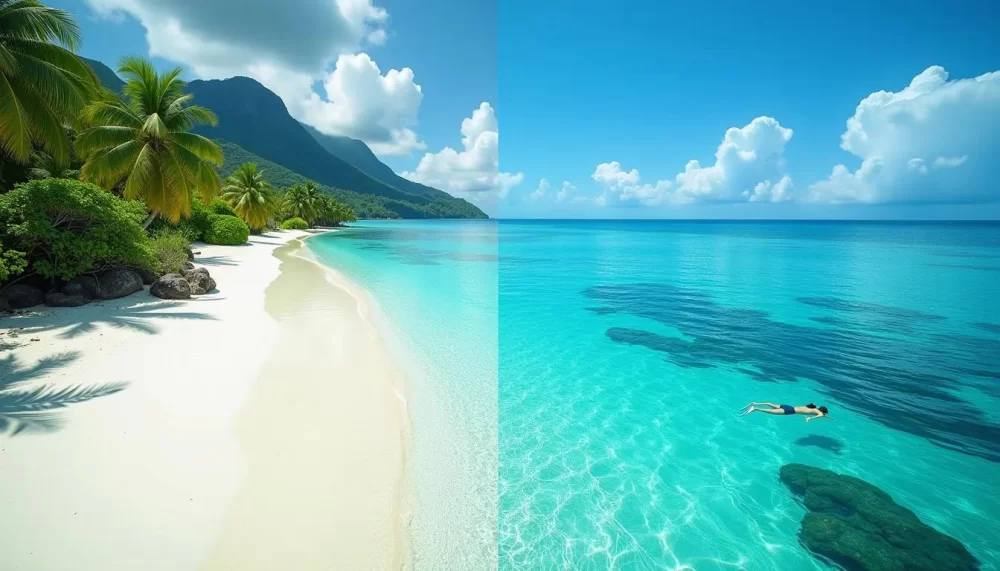
Often referred to as the “Caribbean of Indonesia,” the Anambas archipelago is a collection of over 250 islands located in the middle of the South China Sea. Despite its proximity to Singapore, the Anambas remain shielded from mass tourism due to their geographic isolation. In 2026, these islands have become the premier destination for yacht charters and intrepid divers looking for visibility that frequently exceeds 30 meters.
The crown jewel of the region is Pulau Bawah, a private lagoon complex that serves as a benchmark for conservation. However, the surrounding islands—many of which are uninhabited—provide the true “no-tourist” experience. The water here is a shade of electric blue that defies logic, and the white sand beaches are rarely touched by anyone other than local fishermen. It is a place where you can kayak through mangroves, explore hidden sea caves, and watch the sun dip below the horizon with absolutely no distractions.
4. The Kei Islands: Where Sands Reach Perfection
Located in the Maluku province, the Kei Islands are home to what many travel experts consider the finest sand in the world. At Ngurbloat Beach, the sand is as fine as powdered sugar and remains cool even under the intense tropical sun. By 2026, the Kei Islands have emerged as the premier choice for travelers who value natural aesthetics over luxury amenities.
The Kei archipelago is characterized by dramatic limestone cliffs and hidden caves that house ancient burial sites. Unlike the more developed parts of Indonesia, the local culture here is deeply influenced by the Larvul Ngabal customary law, which prioritizes the protection of the environment. Because there are no major international flight connections, the islands remain incredibly quiet. You can spend your mornings exploring the Goa Hawang caves and your afternoons in total solitude on a stretch of beach that feels like your own private island.
5. The Alor Archipelago: A Diver’s Secret Sanctuary
Tucked away to the north of Timor, the Alor Archipelago is a rugged, volcanic chain of islands that offers some of the most spectacular macro-diving in the world. In 2026, Alor is gaining a reputation among underwater photographers for its “muck diving” sites, where unique species like the rhinopias and flamboyant cuttlefish thrive in the nutrient-rich currents.
Beyond the water, the islands are home to the Abui tribe, known for their traditional LEGO-style houses and vibrant ikat weaving. The island of Pantar, part of the Alor group, offers trekking opportunities up to the summit of Mount Sirung, an active volcano. Because the logistics of visiting Alor require multiple flight connections, the island remains free from the tour-bus culture that defines more popular destinations. It is a land of dramatic peaks, deep-sea trenches, and a profound sense of peace that permeates the local villages.
6. The Kangean Islands: The Forgotten Archipelago
Often overlooked in favor of the nearby Madura or Bali, the Kangean Islands are a hidden gem floating in the Java Sea. This group of islands is rarely mentioned in mainstream travel brochures, making them the ultimate destination for those seeking hidden islands in Indonesia without tourists. The Kangean Islands are a mix of flat, sandy atolls and hilly, forested islands, providing a diverse terrain for exploration.
In 2026, the Kangean Islands are ideal for those who want to experience a side of Indonesia that is truly authentic and uninfluenced by Western tourism. Life here revolves around the sea; the local communities are master boat builders and fishermen. If you visit, you will likely be the only international traveler on the island. You can spend your time exploring hidden rock pools, visiting local markets that sell exotic sea produce, and experiencing the legendary Indonesian hospitality in a setting that hasn’t changed for decades.
Essential Tips for Exploring Hidden Indonesia
Traveling to remote Indonesian islands requires a shift in mindset. You must trade the convenience of apps for the reliability of local knowledge. Here are three tips for a successful 2026 expedition:
- Travel Light and Prepared: Many of these islands do not have ATMs or pharmacies. Bring sufficient cash in Indonesian Rupiah and a robust first-aid kit.
- Respect Local Customs: Many of these islands are deeply traditional. Always dress modestly when entering villages and ask for permission before taking photographs of locals.
- Prioritize Sustainability: In places without advanced waste management, it is your responsibility to pack out every piece of plastic you bring. Leave the island cleaner than you found it.
Frequently Asked Questions (FAQ)
Are these islands safe for solo travelers in 2026?
Generally, yes. The local communities on these islands are known for their extreme hospitality. However, because these areas are remote, medical facilities are limited. Solo travelers should have comprehensive travel insurance that includes emergency medical evacuation.
What is the best way to travel between these islands?
Most of these hidden islands require a combination of domestic flights and local ferries. Some, like the Anambas or Togeans, rely heavily on charter boats or local wooden vessels. Always check the weather forecast, as sea conditions in 2026 can be unpredictable during the monsoon season.
Will I need to speak Indonesian to visit these places?
While English is widely spoken in tourist hubs like Bali, it is rare in these remote regions. Learning basic Bahasa Indonesia phrases will significantly enhance your experience and help you build rapport with local communities.
Is it possible to find luxury accommodation on these islands?
Usually, no. If you are seeking “luxury,” you will be disappointed. These islands offer “experiential luxury”—the luxury of time, silence, and untouched nature. Most accommodation consists of homestays or basic eco-lodges.
Conclusion
As we move further into 2026, the definition of a “luxury vacation” is changing. It is no longer about the thread count of your sheets or the speed of your Wi-Fi; it is about the rarity of the experience. The hidden islands in Indonesia without tourists offer something that money cannot buy: the chance to see the world as it was before the age of mass tourism. Whether you choose the marine wonders of the Togeans, the rugged wilderness of Enggano, or the sparkling sands of the Kei Islands, your journey will be one of profound discovery. Tread lightly, respect the local culture, and enjoy the silence—it is the rarest commodity of our time.
Tags: Indonesia Travel, Off The Beaten Path, Sustainable Tourism, Hidden Islands, 2026 Travel Guide
Category: Adventure Travel