
In the year 2026, we have reached the zenith of global connectivity. With low-earth orbit satellite constellations blanketing even the most isolated oceanic coordinates, the concept of a “dead zone” has effectively vanished. Yet, this total saturation of signal has birthed a new, desperate craving: the digital detox. As we navigate a world where the average human consumes over 12 hours of screen time daily, the true luxury of the mid-2020s is no longer high-speed fiber—it is the sound of absolute silence.
Indonesia, an archipelago of over 17,000 islands, remains the world’s final frontier for those desperate to escape the digital tether. While urban hubs like Jakarta and digital nomad hotspots like Bali have become hyper-connected, there are still pockets of the archipelago where the internet is not just slow—it is effectively non-existent. These are not merely destinations; they are sanctuary spaces designed to force you back into the analog rhythm of the natural world.
The Psychology of the Digital Reset

Why are we trending toward the “no-tech” travel movement in 2026? Neuroscientists have noted that the “always-on” culture has led to a 30% increase in cognitive fatigue among professionals over the last five years. When you are constantly bombarded by notifications, your brain remains in a state of “continuous partial attention.” By choosing an island in Indonesia with no Wi-Fi, you are not just taking a vacation; you are performing a neurological reset.
When you detach from the digital world, your dopamine receptors begin to recalibrate. Without the instant gratification of a “like” or an email, you are forced to engage with your immediate environment. You begin to notice the subtle shifts in tidal patterns, the bioluminescence in the water at night, and the intricate social structures of local fishing communities. This is the art of “deep presence,” a skill that has become remarkably rare in our hyper-connected society.
1. The Togean Islands: A Masterclass in Analog Living
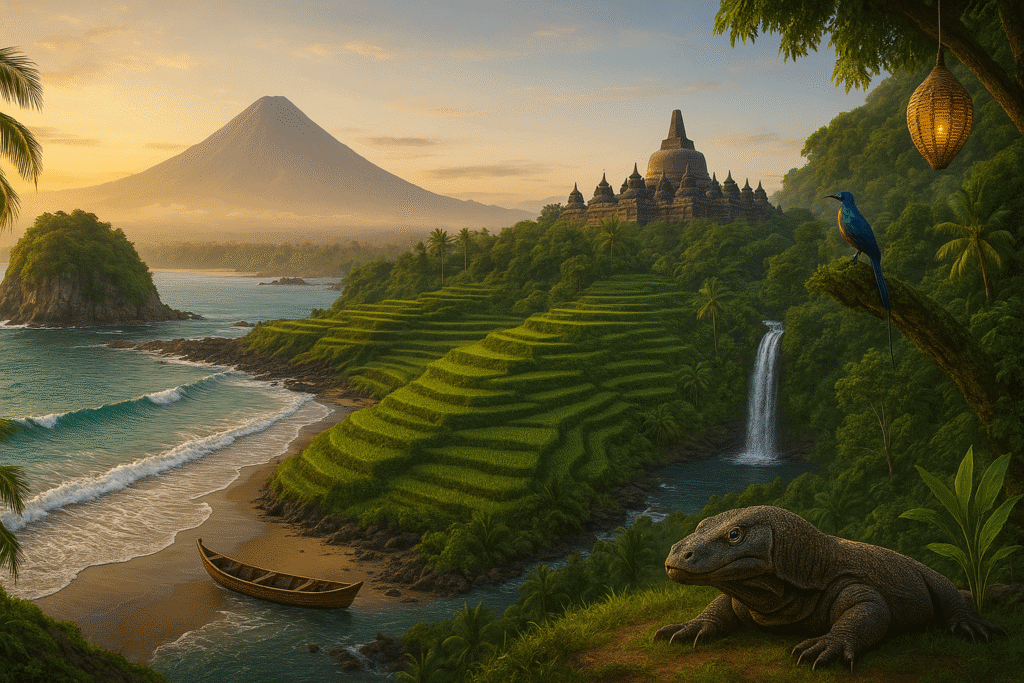
Located in the heart of the Gulf of Tomini, the Togean Islands are the antithesis of the modern smart-city. In 2026, while the rest of the world debates the ethics of AI, the Togeans remain blissfully stuck in a time loop where the only thing that matters is the tide. Most homestays here operate on diesel generators that run for only 4 to 6 hours a day, meaning charging your devices is often impossible, let alone connecting to a network.
Why it remains untouched: The geography of the Gulf of Tomini is notoriously difficult to navigate. There are no major ports, and the islands are spread out in a way that makes consistent satellite infrastructure investment non-viable. This is a blessing for the traveler. You will find yourself in pristine jellyfish lakes where the lack of connectivity ensures you are one of the few humans to witness the migration of marine life without the distraction of a camera lens.
2. Misool: The Jewel of the Raja Ampat Outer Rim
While central Raja Ampat has seen an influx of eco-resorts with satellite internet, the southern reaches of the Misool archipelago remain a true digital void. Misool is defined by its dramatic karst limestone pinnacles and the most biodiverse reefs on the planet. Here, the local communities have actively chosen to limit infrastructure to preserve the integrity of their culture.
The experience: Staying in an overwater bungalow in Misool is a humbling experience. You are miles from the nearest cell tower. During the day, you will spend your time free-diving in visibility exceeding 30 meters. At night, there is no light pollution and no Wi-Fi signal to illuminate your room. You are left with the vast, star-drenched Indonesian sky. It is common for travelers to report a “digital withdrawal” period of 48 hours, followed by a profound sense of clarity and heightened sensory perception.
3. The Anambas Islands: The Forgotten Frontier
Often overshadowed by the more famous tourist trails, the Anambas Islands, located in the South China Sea, offer a rugged, off-grid experience. Because these islands are remote and serve as a protected marine zone, there is virtually no commercial data roaming coverage. If you are looking for an islands in Indonesia with no Wi-Fi experience that feels like a true expedition, this is your destination.
What to expect: The Anambas are characterized by turquoise lagoons and white sand beaches that remain largely empty. Unlike the crowded beaches of Gili Trawangan, you can walk for hours here without seeing another tourist. The lack of connectivity means that if you want to find your way around, you must rely on traditional paper maps and local knowledge. It is a return to the roots of exploration, where serendipity replaces the predictability of a GPS-guided itinerary.
4. The Banyak Islands: Surf and Solitude
For the surfing community, the Banyak Islands (North of Nias) serve as a pilgrimage site. While some of the more established surf camps have introduced Starlink, there are still remote outer-island camps that strictly forbid the use of electronic devices to maintain the tranquil atmosphere. These islands are raw, untamed, and offer some of the most consistent waves in the world.
The lifestyle: Life here is governed by the swell. You wake up when the sun rises, check the surf, and spend your hours in the water. The lack of internet forces a communal social dynamic—at night, travelers and locals gather around a fire to share stories instead of scrolling through feeds. This is where you rediscover the joy of face-to-face conversation, a lost art in the digital age.
Essential Tips for Surviving Your No-Wi-Fi Trip
Transitioning from a 24/7 connected lifestyle to an offline island existence requires preparation. If you go in unprepared, the anxiety of being “unreachable” can ruin your experience. Follow these guidelines to ensure your digital detox is successful:
- The “Out-of-Office” Protocol: Set your auto-responders at least three days before you leave. Clearly state that you will have zero access to communication and provide an emergency contact for urgent matters only. This prevents the “what if” anxiety from creeping in.
- Analog Entertainment: Bring physical books, a journal, and a sketchbook. You will be surprised by how much free time you have when you aren’t scrolling. In 2026, the physical book has seen a resurgence as the ultimate travel accessory.
- Offline Navigation: Download your offline maps (Google Maps or Maps.me) long before you reach the port. Even if you don’t have a signal, having a GPS-tracked map can provide a safety net for your own peace of mind.
- The “Emergency” Myth: Acknowledge that 99% of your notifications are not emergencies. By removing the ability to see them, you realize how much of your stress was self-imposed.
Frequently Asked Questions
Is it truly possible to find zero signal in Indonesia in 2026?
Yes. While satellite internet has expanded, many of the remote islands in the Raja Ampat, Togean, and Banyak archipelagos operate on independent, localized power grids that do not support satellite arrays. In these areas, the terrain (dense jungle and limestone cliffs) often blocks even the strongest signals.
What if I have an emergency?
Most remote island homestays in Indonesia maintain a high-frequency (HF) radio or a satellite phone specifically for medical or logistical emergencies. While you won’t be able to check your email, you are never truly abandoned. Always confirm with your host that they have emergency communication protocols in place before you arrive.
How do I handle the “withdrawal” from social media?
The first 48 hours are the hardest. You will feel a phantom vibration in your pocket—a phenomenon known as “phantom vibration syndrome.” To combat this, keep your phone packed away in your luggage rather than your pocket. Engage in physical activities like snorkeling, hiking, or learning a local craft to keep your hands and mind occupied.
Are these islands safe for solo travelers?
Indonesia is generally very safe, but traveling to remote, off-grid locations requires a higher level of self-reliance. Always inform your hotel or family of your itinerary, hire reputable local guides, and ensure you have comprehensive travel insurance that covers medical evacuation from remote locations.
Conclusion: The Value of Returning to Yourself
In 2026, we are often defined by our digital footprint. We are the sum of our posts, our professional profiles, and our online interactions. However, by choosing to visit an island in Indonesia with no Wi-Fi, you are reclaiming your identity from the cloud. You are choosing to be defined by your experiences rather than your content.
Whether you find yourself floating in the bioluminescent waters of the Togeans or watching the sunset over the jagged peaks of Misool, the absence of Wi-Fi provides something far more valuable than connectivity: it provides clarity. In the silence of the Indonesian archipelago, you finally have the space to hear your own thoughts again. That is the greatest luxury of the modern age.